

Discover how June
compares with Google Analytics
What is the best analytics platform for your product and marketing teams? See how June compares with Google Analytics? Enjoy a detailed comparison of June vs Google Analytics.
June vs Google Analytics comparison.
- Public pricingNot includedNot included
- Free tier or trialIncludedIncluded
- Self-serve signupIncludedIncluded
- Usage-based pricing (not per seat)IncludedIncluded
- Cookieless trackingNot includedNot included
- No analytics cookies requiredNot includedNot included
- EU or regional data hostingIncludedIncluded
- IP anonymization by default Included
- Self-hosted deploymentNot includedNot included
Clics, the simple privacy first web analytics software
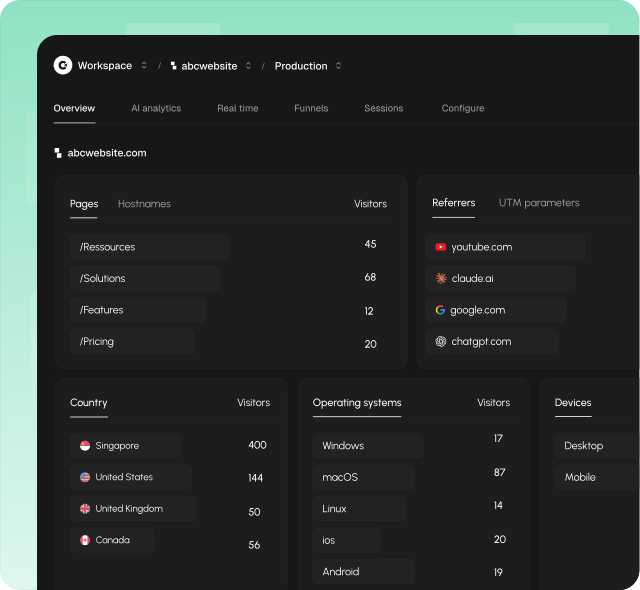
Clics makes website analytics something your team actually looks forward to every week: easy, modern, and genuinely useful. At its core is a clean dashboard anyone can open without training: visitors, traffic sources, goals, conversions, and multistep funnels on one screen, plus a dedicated view for AI referral traffic from ChatGPT, Claude, Perplexity, Gemini, and Copilot.
Its strength is staying simple without giving up what marketing teams actually measure. A tracking script under 5 KB does not set analytics cookies on visitors. Clics is designed with GDPR, CCPA, and PECR in mind, and reports full counts you can trust in reviews.
Unlimited teammates share one workspace, the 14 day trial does not require a credit card, and human support typically replies in under 30 minutes when setup or reporting questions come up.
What is June?
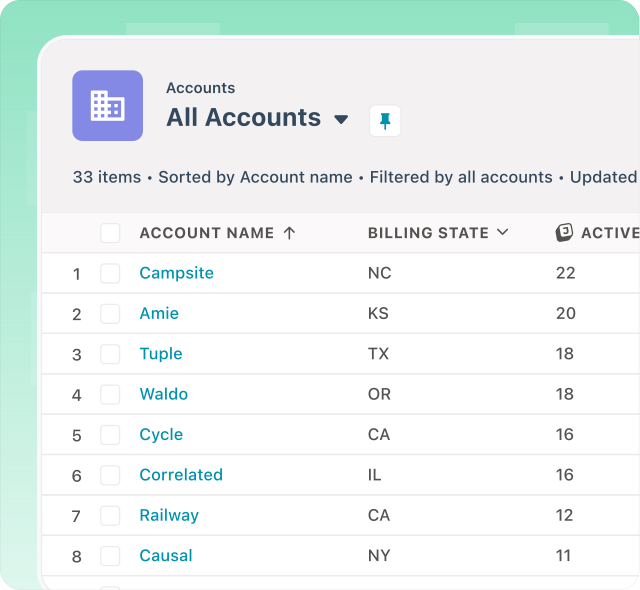
June is a product analytics platform designed specifically for B2B SaaS teams who need company-level insights alongside individual user behavior. It offers product usage tracking, customer health scores, integration with Salesforce, HubSpot, and Attio, computed traits, audience alerts, and embed APIs for sharing analytics within customer-facing dashboards. Teams can build custom insights using SQL queries or an AI assistant that interprets natural language questions about product engagement patterns. The platform focuses on helping revenue and customer success teams interpret account health, identify expansion opportunities, and reduce churn through behavioral signals. June connects product engagement directly to business outcomes and pipeline metrics for growth teams.
See the June alternative write-up for June on Alternatives.
What is Google Analytics?
Google Analytics is the most widely used web analytics platform globally, now in its fourth generation as GA4. It tracks website and app traffic through an event-based data model that replaced the session-based approach of Universal Analytics. Features include audience reports, acquisition channels, engagement metrics, conversion tracking, path exploration, funnel visualization, and predictive audiences powered by machine learning. The platform integrates deeply with Google Ads, Search Console, BigQuery, and Looker Studio for advertising optimization and custom reporting. GA4 offers a free tier with generous data collection limits and a paid Analytics 360 version for enterprises needing higher quotas, service level agreements, and dedicated support.
Explore the Google Analytics alternative page for Google Analytics on Alternatives.
More head-to-head comparisons
Explore more side-by-side comparisons between popular analytics tools.